
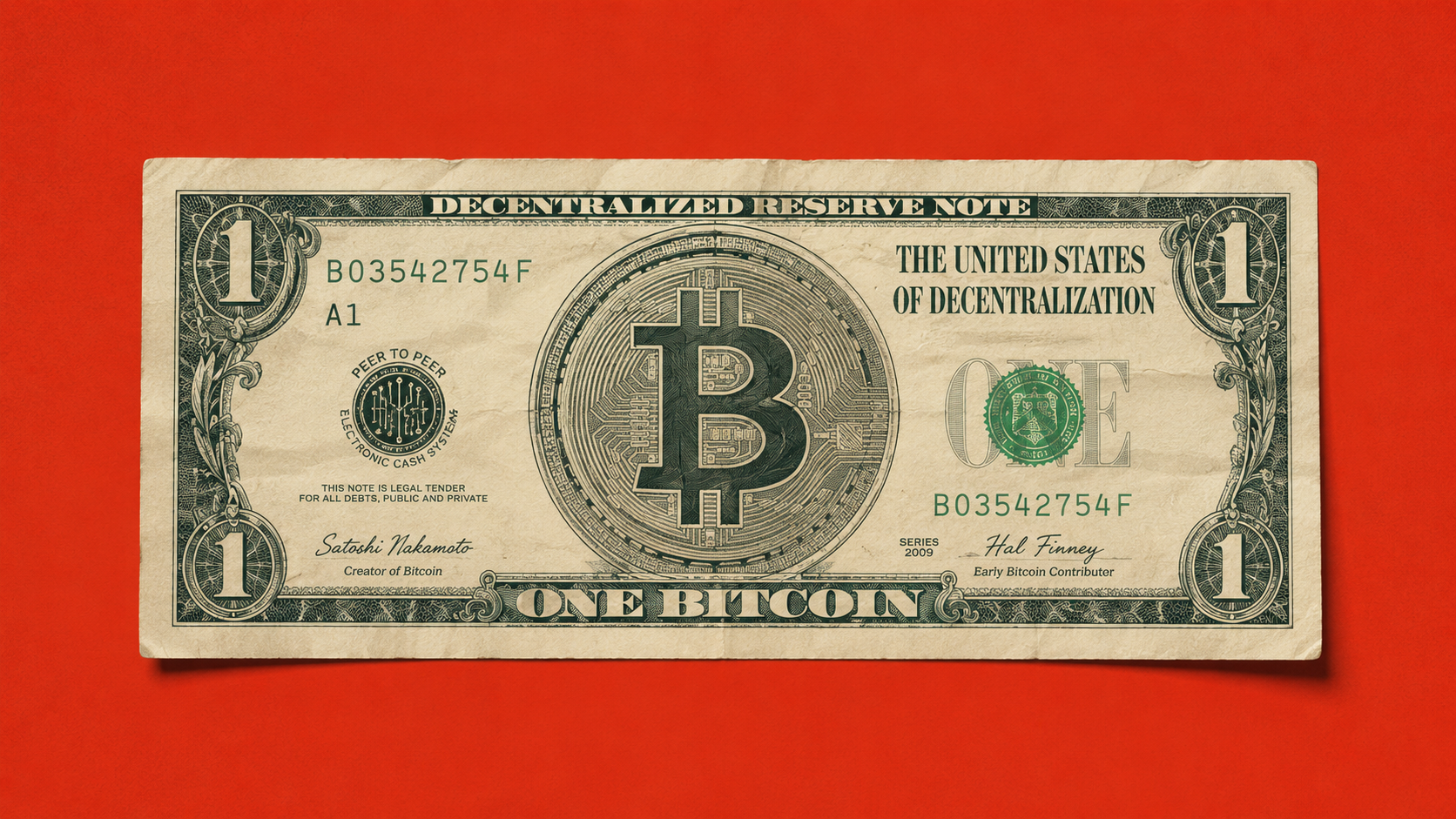
Are Cryptocurrencies Simply Fiat Currencies?
Cryptocurrencies were first introduced as a medium of exchange in 2010 when two pizzas were purchased for 10,000 BTC (very expensive dinner in retrospect). The concept of a digital currency has been discussed with increasing, if not polarizing views since Bitcoin was first introduced.
Bitcoin’s value has appreciated enormously since the purchase of those first pizzas as its acceptance has gained traction, as has the volatility. The value accretion has greatly increased the money and wealth available to holders of Bitcoin and other forms of cryptocurrency. The impact of the various cryptocurrencies is the focus of this paper.
The first reported use of paper money is attributed to a report by Marco Polo on the Yuan Dynasty back in the 13th century[i]. The dynasty was universally forced to accept the currency despite the growing supply of minted paper. Eventually the dynasty crumbled as hyperinflation took hold. War and the demands on supplies to finance war has often been coincident with the increased supply of fiat currency.
The earliest form of fiat currency in Canada is believed to be paper issued by the Bank of Montreal in 1817[ii]. The banknotes were issued against the assets of the bank and convertible into specie (or physical coins of gold or silver acknowledged to have intrinsic value) at the branch that issued the notes. Whether likened to an ‘I owe you’ or a fractional senior deposit note, these notes were convenient and perceived to be unconditionally exchangeable into the gold in the bank’s vault.
The characteristics of a fiat currency that allow it to be exchanged freely and distributed widely flow from the belief that as a store-of-value it will be safe, stable, liquid and predictable. The introduction of any form of currency is an answer to the problem of timing alignment with our consumption needs. The barter system of exchange may suffice in a simple agrarian economy but as our needs and skills are applied in more sophisticated production processes, the need for a store of value has developed to meet the need for intertemporal consumption. Effectively, we need a means to save for retirement.
After the Bank of Montreal successfully introduced banknotes, other banks followed. It is not difficult to see the appeal. For commerce the notes were easier to handle particularly for larger transactions. For the banks it was easy to create a piece of paper with a signature and lever up their balance sheet. There was no reserve requirement at that time, only to maintain confidence in their ability to redeem the notes. As one bank created money with paper, others followed. Governments took notice, and after the union of upper and lower Canada in 1841, the Province of Canada considered abolishing private banknotes and taking on the printing role themselves[iii]. Twenty-five years later, by act of government, they created notes of legal tender. The notes were issued with the requirement that they were backed by at least 20% specie (or physical coins). In effect this allowed the government to lever its assets by up to 5 times. Eventually this requirement fell away, and more flexible rules were introduced.
By any measure, the creation of fiat currency expands the supply of money. All else being equal it also devalues the money in circulation. It is inflationary and acts as a wealth tax. But a modest growth in money supply has a modest impact. When treasury works with the central bank to manage the growth of money supply, the modest growth of money can be desirable because it reflects the productive growth of the economy.
Fiat is a latin word that is translated to “let it come into existence”. Something that did not exist but now does because it was declared as such. Paper that is declared legal tender fits the definition perfectly. Fiat currency and paper money are term used interchangeably. However, fiat extends beyond paper money. Any instrument that doesn’t represent an object with intrinsic value can declared as valuable. Creating a new item of value creates wealth for the creator, but with no new creation of intrinsic value for society, any newly issued fiat currency simply devalues all existing fiat currencies. When society embraces the valuation of the new fiat currency it is inflationary by any gauge.
E-transfers were launched in 2003 as a means to transfer money as a peer-to-peer solution. The solution was developed by Interac in conjunction with the major financial institutions as an extension of their Automatic Banking Machine (ABM) network. But e-transfers are an electronic transfer of existing monetary assets, rather than new assets.
Google tells me that there are over 16, 000 digital or cryptocurrencies that are valued at over $2 trillion USD. The high was in 2021 at $3 trillion. Inflation picked up in 2022 and remains well above the level that central banks generally target. Yet central banks don’t control the issuance of cryptocurrencies. However, steps are being taken to regulate forms of cryptocurrencies.
The GENIUS Act (Guiding and Establishing National Innovation for the U.S. Stablecoins Act) was signed into law one year ago. The critical point in the act is the requirement to maintain 100% reserve backing for their issuance. This is a key distinction because even if backed by fiat currency, it doesn’t create fiat currency.
While some cryptocurrencies fit the definition of fiat, others do not. If I have learned anything about the future of cryptocurrencies over the last couple of years, it is simply that anyone can launch a digital coin and declare it valuable but there is a requirement to embrace the value proposition. How will it maintain a form of intrinsic value that I can exchange at my local grocery store in a decade?
______________________________
[i] Griffin, G. Edward (2010). The Creature from Jekyll Island: A Second Look at the Federal Reserve (5th ed.)
[ii] Fung, Ben, Scott Hendry, and Warren E. Weber. 2017. Canadian Bank Notes and Dominion Notes: Lessons for Digital Currencies. Bank of Canada Staff Working Paper 2017-5
[iii] ibid
Follow us on LinkedIn to stay up-to-date.
The information contained herein has been provided by GB Wealth Inc. and is for information purposes only. The information has been drawn from sources believed to be reliable. It is not intended to provide legal, accounting, tax, investment, financial or other advice and is not to be construed as a recommendation to buy or sell. The information contained herein may constitute forward looking information. Forward looking information is based on assumptions and subject to risks and limitations. GB Wealth Inc. is not liable for any errors or omissions in the information or for any loss or damage suffered. The GB Wealth logo and other trademarks are the property of GB Wealth Inc.